The City of Lethbridge, Alberta, is facing mounting pressure to upgrade its wastewater treatment system, as aging infrastructure and rising demand push the facility beyond its limits and threaten long-term reliability.
A newly completed Asset Management Plan for the city’s wastewater treatment plant presented to the Community Issues Committee on April 16 outlines significant risks tied to deteriorating equipment, limited system redundancy and growing capacity constraints.
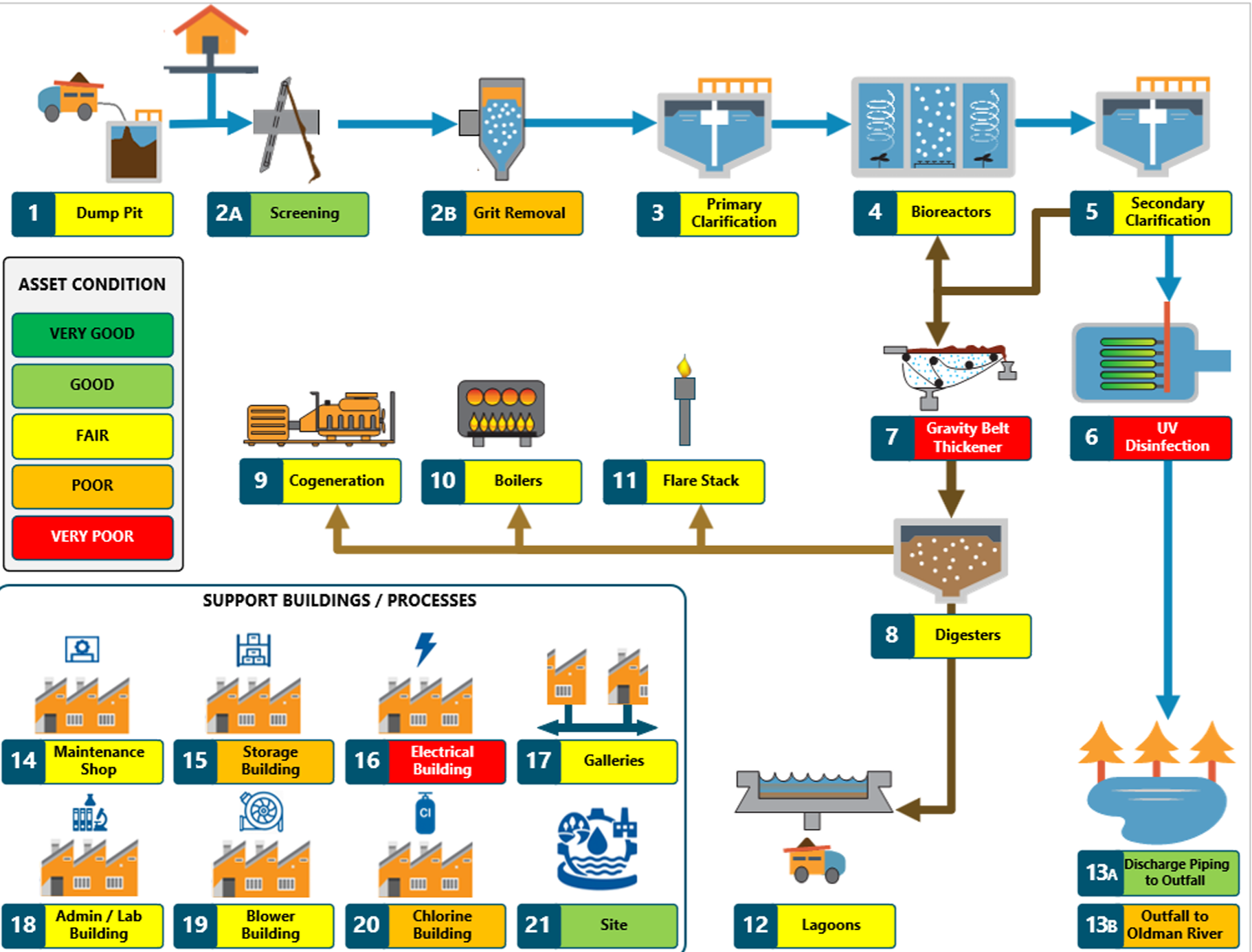
Originally expanded in the late 1980s, much of the plant’s infrastructure is now at or beyond its intended service life. Critical components, including the UV disinfection system, gravity belt thickener and electrical building, are in poor or very poor condition, increasing the likelihood of equipment failure and regulatory non-compliance.
“The wastewater treatment plant is one of the most important services we provide, but the facility is under real strain,” said Joel Sanchez, director of infrastructure services, in a statement from the city. “Many systems are old, and we no longer have backup options if something breaks. That puts the community at risk.”
Subscribe to our Newsletter!
The latest environmental engineering news direct to your inbox. You can unsubscribe at any time.
The plant is currently designed to treat approximately 40 to 50 million litres of wastewater per day, but is already operating at or above that capacity under typical conditions due to stronger-than-expected influent flows. This limits the city’s ability to support new residential, commercial and industrial development, Sanchez said.
According to the report, the lack of capacity and aging infrastructure together pose a dual risk: not only to regulatory compliance and environmental protection, but also to Lethbridge’s economic growth. To address these pressures, the plan proposes a phased capital strategy beginning with an expansion of the facility’s capacity to roughly 60 million litres per day. The estimated cost of upgrades and expansion ranges from $250 million to $350 million, reflecting the scale and complexity of the work required.
“This plan gives us a clear picture of what needs to happen,” Sanchez said. “The costs are significant. However, the risks of doing nothing are even greater.”
Phase two of the plan focuses on lifecycle renewal or replacement of existing assets not directly associated with the capacity expansion, while phase three addresses growth subject to long-term demand, development of a new treatment train at the existing facility or construction of a net new greenfield WWTP.
City officials warn that failing to invest could lead to serious consequences, including service disruptions, environmental impacts and potential regulatory penalties that could reach into the millions.
Additional capacity is required for the primary pump house, cogeneration, bioreactors, electrical building, blower building, secondary clarification, digester building, the flare stack, the UV building, and the outfall.
The next phase of the process will focus on identifying funding strategies and assessing potential impacts on utility rates. Administration is expected to present detailed options, including design plans and financial scenarios, at a May 13 committee meeting as part of the city’s 2027–2036 Capital Improvement Plan discussions.
The report emphasizes that while capacity expansion is the immediate priority, longer-term investments will also be required to replace aging assets and support future growth, ensuring the system can continue to protect public health and the environment for decades to come.