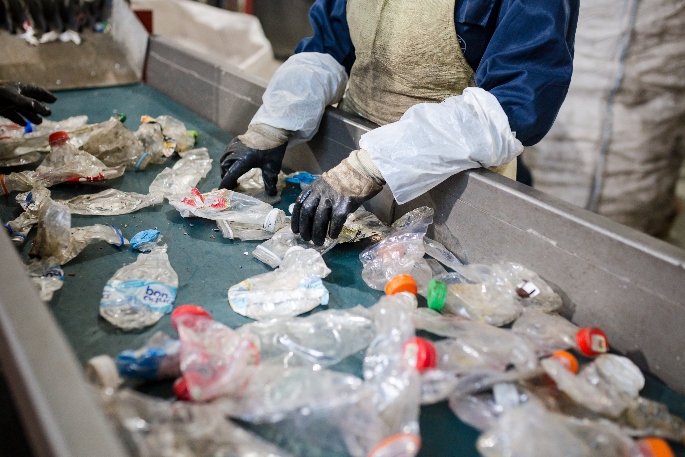
A new CSA Group Standard aims to outline a clearer national definition for plastics recycling, as well as a better way to determine the point when materials can be deemed “recycled”.
Only 36% of Canadian business leaders that responded to a recent CSA Group survey said they felt confident to define plastics recycling, which the testing and certification group says underscores the need for clarity across the entire plastics recycling supply chain.
CSA Group says that a common definition may help to create a common outcome when it comes to recycling.
The CSA R117:24: Plastics Recycling: Definitions, measuring, and reporting standard developed by CSA Group, with support from the Standards Council of Canada (SCC), has been several years in the making and is informed by several key reports on the subject.
Subscribe to our Newsletter!
The latest environmental engineering news direct to your inbox. You can unsubscribe at any time.
The new standard is intended to assist Canada’s policymakers and business leaders to clearly and consistently assess when and how much plastic has been fully recycled. The new definition also aims to help standardize the reporting and calculation of recycling rates, targeting all non-biodegradable plastics.
“By establishing a standardized framework and consistent definitions across the various recycling methods, tracking and measuring, the circularity of plastics becomes more clear,” announced Michael Leering, director of Environment & Business Excellence at CSA Group. “In turn, this new National Standard can help support better decision-making across supply chains.”
The new CSA Standard generally defines recycling as: “The processing of waste materials to produce secondary materials from which new products are made.” It excludes from the definition processes such as reuse or waste-to-energy.
The standard goes on to define ‘recycling rate’ as “the total amount of target waste recycled as a percentage of the total amount of target waste generated.”
In a 2021 CSA Group report that helped to inform the new standard, a circular economy-based definition for recycling plastics is stated as follows:
“Recycling is the reclamation of plastics (as polymer, monomer, or constituent chemical building blocks) in such a manner that they displace the primary or raw materials that are used as chemical building blocks in the production of plastics and plastic products and packaging.”
In the context of bio-based plastics:
“Organic recycling is the processing of bio-based plastics into biological nutrients.”
Various stakeholders stand to benefit from the new standard, including policymakers wishing to establish plastics recycling rate targets in legislation, municipalities that report data on the recycling of plastic, waste management companies reporting on their recycling performance, and industries involved in the plastics supply chain.
Jo-Anne St. Godard, executive director of the Circular Innovation Council, says the new recycling definition and calculation points create “transparency and rigour” within the wider industry.
“It will level the playing field,” St. Godard said at a CSA Group webinar for the new standard, referring to the methodology used to create recycling metrics.
Graphic figures within the new standard illustrate the calculation points for different mechanical and chemical recycling value chains.
To learn more about the new standard, visit the Plastics Recycling page on the CSA Group website.