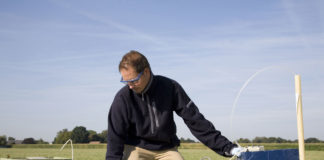


Two renowned Canadian researchers have each been awarded an NSERC Donna Strickland Prize for Societal Impact of Natural Sciences and Engineering Research, including one for reshaping understanding of how contaminants move through fractured bedrock aquifers, and another for innovations for monitoring the condition of structures such as bridges and pipelines.
Dr. Beth Parker is a professor in the University of Guelph’s Department of Civil, Environmental and Water Resources Engineering, and director of the University’s Morwick 360 Groundwater Research Institute. She has made substantial advances in the protection of Canada’s groundwater by probing deep into the earth to research contaminant movement in fractured bedrock aquifers.
Since 2020, the NSERC Donna Strickland Prize for Societal Impact of Natural Sciences and Engineering Research has been awarded annually to an individual or team whose outstanding research, conducted in Canada in the natural sciences and engineering, has led to exceptional benefits for Canadian society, environment and/or economy. Winners of this award receive a $250,000 research grant over three years.
“My field-based research program is conducted at real contaminated sites and within communities that rely on groundwater for drinking water,” says Parker. “It involves direct engagement with regulators and decision-makers, and rapidly translating research findings to inform actions that protect public health and freshwater resources. It is immensely rewarding to see this work contribute to positive outcomes at the community level. This award recognizes collective efforts of a large team of talented staff and graduate students over several decades, and our strong collaborations with industry professionals.”
Subscribe to our Newsletter!
The latest environmental engineering news direct to your inbox. You can unsubscribe at any time.
Parker was the first to demonstrate how contaminants trapped in certain rock layers can slowly seep back into groundwater over time, helping explain why conventional cleanup methods often fall short. Her findings have led to more effective, sustainable approaches to remediation.
Two of her key innovations — the COREDFN and “golden spike” methods — allow for high-resolution monitoring and predictive modelling of groundwater systems. These tools are now used by engineers, municipalities, and policymakers worldwide to assess risk, plan remediation, and protect drinking water, particularly in rural and Indigenous communities.
As aquifers face growing pressure from climate change and urban development, Parker’s work continues to shape groundwater protection strategies and safeguard clean water supplies for future generations.
The second NSERC Donna Strickland Prize for Societal Impact of Natural Sciences and Engineering Research in 2025 is University of Ottawa physics professor, Dr. Xiaoyi Bao, whose innovations, including distributed acoustic sensing technology and low-noise lasers, have reshaped how we monitor the condition of structures such as bridges and pipelines.
Bao has developed innovative Distributed Acoustic Sensor (DAS) technology that transforms ordinary fibre-optic cables into ultra-sensitive detectors capable of “hearing” stress, cracks, and vibrations in structures such as bridges, pipelines, railways, and reactors.
Unlike traditional visual inspections, DAS continuously listens for signs of strain in real time— providing early warnings that can prevent accidents and failures before they happen.
Bao’s innovations in distributed sensing and low-noise laser design have reshaped how engineers monitor structural health. Her technologies are now deployed across sectors including oil and gas, aerospace, and public infrastructure, where safety and reliability are critical.
By replacing millions of conventional sensors with a single, predictive fibre-optic system, DAS reduces maintenance costs, safeguards ecosystems, and saves lives. As climate change increases stress on critical infrastructure, Bao’s work is helping Canada and the world build a safer, more resilient future.
“I chose optics and photonics because it combines fundamental science with real-world applications,” Bao explains. “Optics is everywhere — in cellphone and computer displays, cameras, AI sensors, health-care devices, and systems that monitor the structural health of planes, pipelines, dams, bridges and trains. It connects physics to everyday life.”
Bao has authored or co-authored more than 670 peer-reviewed papers and conference proceedings.
Her achievements have been recognized with three major awards from the Canadian Association of Physicists — a first in the organization’s history.