

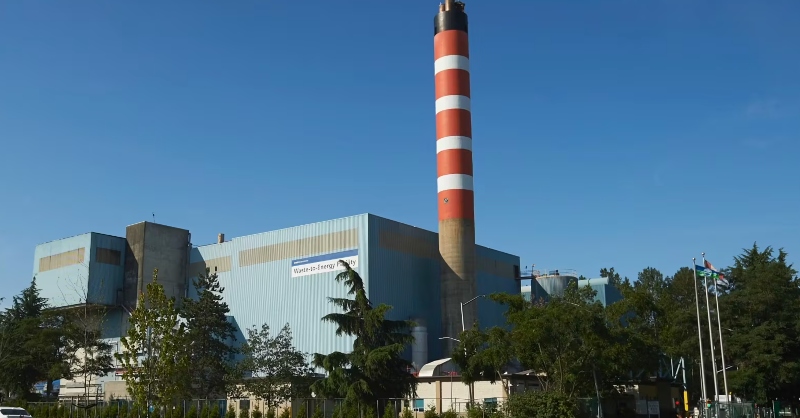
Veolia has signed a five-year, $245-million agreement to manage the operations, maintenance and capital replacements for a waste-to-energy facility in Burnaby, B.C.
The facility processes about one quarter of Metro Vancouver’s waste, producing approximately 180,000 megawatts per year of electricity, enough to power 16,000 homes and recover about 5,000 tonnes of recyclable metal per year, according to Veolia, which operates 60 other waste-to-energy facilities worldwide.
“Veolia is currently present in 44 countries around the world and our goal is to capitalize on our experience to lead ambitious and high-performance projects,” announced Country Director and CEO of Veolia Canada, Denis Chesseron. “This is what we are doing here in Burnaby, in line with our GreenUp strategic program in which local low-carbon energy production is a growth booster: we are using our expertise to help develop a system that will triple the amount of energy recovered by the facility to provide heat and hot water to the local network.”
Stack emissions and air quality around the facility have been monitored since the facility opened in 1988.
Subscribe to our Newsletter!
The latest environmental engineering news direct to your inbox. You can unsubscribe at any time.
As Veolia took on its new duties at the Burnaby facility, the Canadian Association of Physicians for the Environment (CAPE) launched a campaign to shut it down. CAPE is warning of “dioxins, mercury, cadmium, lead, and other pollutants that exacerbate lung diseases such as sulfur dioxide and nitrogen oxides,” the group announced in a statement.
Metro Vancouver’s general manager of Solid Waste Services, Paul Henderson, appeared on CBC Vancouver News to respond to CAPE. He told the broadcaster that the facility is regulated under a provincial operational certificate that sets parameters for toxic chemicals such as dioxins and furans.
“The levels that we monitor at that facility are dramatically below regulatory limits and are typically not detectable,” Henderson told CBC.
Metro Vancouver is also developing a district energy system that will triple the amount of energy that the facility can recover. It will utilize steam generated through the combustion of solid waste to provide heat and hot water for up to 50,000 homes in Vancouver and Burnaby.
In December 2024, Veolia was awarded a new contract to manage operations and maintenance at the City of Toronto’s Dufferin Organics Processing Facility, meaning the company will now oversee both of the city’s key organics processing facilities.
Veolia also operates the City of Montreal’s In-Vessel Composting Facility and will be operating its new anaerobic digestion facility later in 2025.
Related Professional Development Course
Attend “Environmental Issues: Air Quality, Climate Change, and Decarbonization” on April 30th at the CANECT 2025 Environmental Compliance and Due Diligence Training Event in Vaughan, Ontario.
This popular course is constantly being updated to deliver Canada’s most authoritative guide to complying with federal, provincial, and municipal rules governing industrial air emissions (noise, odour, air quality) while avoiding associated liability. Click here to explore the course agenda and speaker list, and register today.




