


Evaluating the results of 12 years of monitoring PFAS in municipal wastewater treatment systems
Previous research has shown only partial removal and, in some cases, apparent formation of PFAS during some wastewater treatment processes, which was attributed to transformation of unmeasured PFAS precursors.

Moncton air quality study finds no health hazard from sewage odours
A new air quality study for the north end of Moncton, New Brunswick, says that while there are certainly unpleasant odours emanating from the...
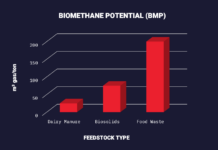
Harnessing the power of wastewater treatment plant digesters with co‑digestion
Concerns can arise when implementing a co-digestion system that operates using both wastewater and municipal food waste. However, with the proper tools and the right collaborative partnership, WWTP operators can take the guesswork out of feeding and understanding the state of the biological system.

Overcoming anaerobic digester failures: Shared lessons from municipal and industrial facilities
Municipal and industrial anaerobic digesters can be prone to process upsets and failures, which present significant issues for owners and operators.

Quebec’s new biochar plant set to be largest in North America
Canada’s first and largest industrial-scale biochar plant — an $80-million project capable of eventually sequestering 75,000 tonnes of carbon per year — is set...

Québec bans U.S. biosolids imports until it develops PFAS protections
As a “sign of caution,” Québec has issued a temporary moratorium on biosolids imports from the U.S., as it works to establish control mechanisms...

Ontario’s Whitesand First Nation secures long-sought funding for biomass plant
After lobbying for the project since 1992, the Whitesand First Nation in northwestern Ontario has finally secured $35 million in federal funding for its...

Can thermal hydrolysis of sludge solve problems caused by micro/nanoplastics?
A new study by researchers from the University of Alberta identified that thermal hydrolysis of sludge before anaerobic digestion could alleviate oxidative stress on the digester microbiome and maintain smooth operation under high levels of polystyrene nanoplastics in sludge. The study also found that thermal hydrolysis could also mitigate the spreading potential of antibiotic resistance genes in digested sludge, or biosolids, which can be encouraged by the high levels of polystyrene nanoplastics.

Decanters provide smooth operation for military base’s WWTP
The wastewater treatment plant's most important goal in dewatering was to maximize the reduction of the volume of sewage sludge.

Vancouver firm using electrochemical oxidation to destroy PFAS, WEF begins pyrolysis study
As Vancouver-based Axine Water Technologies reports some success in destroying per- and polyfluoroalkyl (PFAS) compounds in water and wastewater through electrochemical oxidation, the U.S.-based...
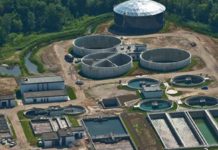
AECOM set to design biosolids upgrades for Bradford WPCP in Ontario
The Town of Bradford West Gwillimbury, Ontario’s second-fastest growing municipality, has hired infrastructure consulting firm AECOM as the design partner for a three-phase biosolids...
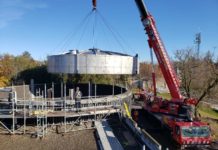
Fergus, ON completes new steel roof for WWTP secondary digester
Ontario’s Centre Wellington Township has removed and replaced the 30-year-old roof of the Fergus Wastewater Treatment Plant’s secondary digester for biosolids, which had been...
Latest Articles

Innovative approach creates fish habitat to compensate for bridge project impacts
Offsetting, which involves restoring or creating fish habitat to compensate for project impacts, is one of the most complex components of the FAA process.



