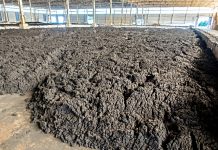
CFIA gives inspection notice for producers, importers to arrange biosolids PFAS lab test
The Canadian Food Inspection Agency (CFIA) says that as of October 18 it will begin to enforce an interim standard for biosolids to ensure...
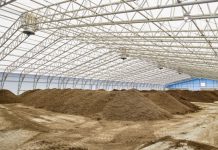
Calgary begins expansion to create one of Canada’s largest compost facilities
Construction is now underway for an expansion of Calgary’s existing composting facility that will make it one of the largest in Canada.
Opened in 2017,...
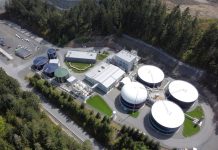
B.C.’s CRD releases biosolids plan that highlights thermal processing
British Columbia’s Capital Regional District (CRD) Board has approved its final Long-term Biosolids Management Strategy for submission to the province, including a three-tiered approach...

CANECT 2024 marks another successful conference, including two all-new courses
Environmental professionals from all regions of Canada, as well as a number of U.S. attendees, gathered for three days of education, networking and environmental...
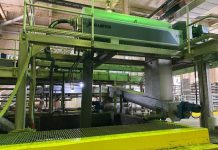
Centrifuge decanter helps WWTP achieve 30% solids sludge cake
In just the first two years of operation, the Water Reclamation Facility in the City of Middletown, Ohio, installed a highly efficient decanter that reduced production time by two days a week, increased efficiency, and saves thousands of litres of chemicals per year.
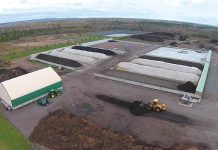
Spring marks crucial test for NB biosolids composting facility
A third-party audit of the composting facility’s system in summer 2023 revealed that ongoing modifications may have eventually compromised aspects of the GORE system.
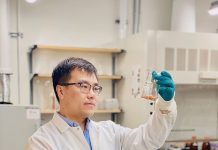
Regina water expert pioneers sustainable solution to transform sludge into multi-use ceramsite
When Dr. Jinkai Xue, principal investigator at the University of Regina’s Cold-Region Water Resource Recovery Laboratory, and an associate professor in the Faculty of Engineering & Applied Science, learned that the nearby Buffalo Pound Water Treatment Plant was spending upwards of $1 million annually to transport and landfill water treatment residual stored in on-site lagoons, he set up a meeting with plant management to explore innovative reuse solutions that not only promised substantial cost savings but could significantly diminish the plant’s environmental footprint.
Texas farmers launch PFAS lawsuit against biosolids company
A group of Texas farmers is suing a Maryland-based company, which also produces biosolids in Canada, over claims their farms were damaged by a...

Ontario’s North Perth signs $2.2M biosolids hauling, application deal
Ontario’s Municipality of North Perth, just northwest of Kitchener, has approved a $2.2-million, five-year contract with Ontario Greenways Inc., for the removal, hauling, and...

Red Deer’s nutrient management facility soon underway to reduce phosphorus
Preliminary demolition work will get underway in one month’s time for the construction of a new $19-million nutrient management facility (NMF) in Red Deer,...

Moncton council insists on stronger measures to limit odours from biosolids facility
After years of odour complaints about a biosolids composting facility in Moncton, New Brunswick, the city council is requesting that the facility either enclose...

Naturally-elevated metals concentrations are resulting in more landfilling and less beneficial reuse of soils
Under this regulation, excess soils containing specific metals within the range of natural background concentrations may be prevented from beneficial reuse.
Latest Articles

Petroleum substance in Halifax sewer system prompts evacuations
A petroleum-based substance discharged into a Halifax-area sewer system prompted the evacuation of residents from about 70 households and an overnight hazardous materials response...