

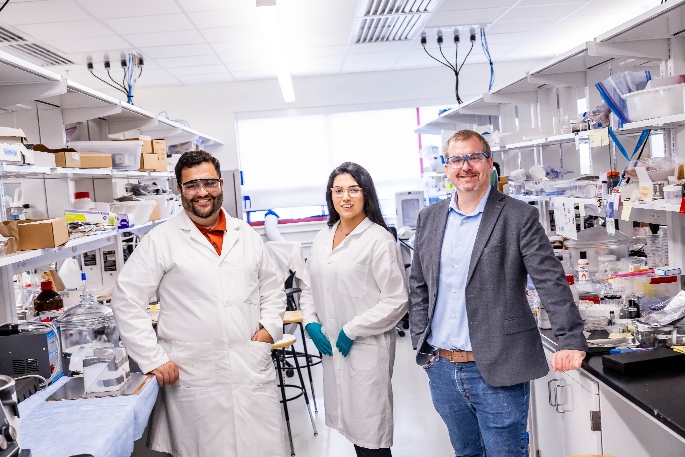
The University of British Columbia (UBC) is touting a new PFAS-removal system that combines an activated carbon filter with a patented catalyst, trapping and breaking down the “forever chemicals” into harmless components on the filter material through adsorption.
The UBC team says its testing with an iron oxide/graphenic carbon hybrid photocatalyst consistently removed more than 85% of PFOA (perfluorooctanoic acid) even under varying UV light intensities, making the treatment process feasible for a northern municipality that gets minimal sunlight.
“Our catalyst can eliminate up to 90% of ‘forever chemicals’ in water in as little as three hours — significantly faster than comparable solutions on the market,” announced lead researcher Dr. Johan Foster, an associate professor of chemical and biological engineering in UBC’s faculty of applied science. “And because it can be produced from forest or farm waste, it’s more economical and sustainable compared to the more complex and costly methods currently in use,” added Foster.
In a statement from UBC, Foster noted that PFAS are “notoriously difficult to break down,” but his team’s system can remove and destroy harmful compounds in the water supply in a quick, two-step process before they can pose risks to human health.
Subscribe to our Newsletter!
The latest environmental engineering news direct to your inbox. You can unsubscribe at any time.
While PFAS mitigation systems tend to focus on either adsorption or destruction, Foster says his process does both, “making it a long-term solution to the PFAS problem instead of just kicking the can down the road,” he said.
In addition to being able to handle huge amounts of water, the UBC team explained that its catalyst has versatility that shows potential for removing other types of persistent contaminants.
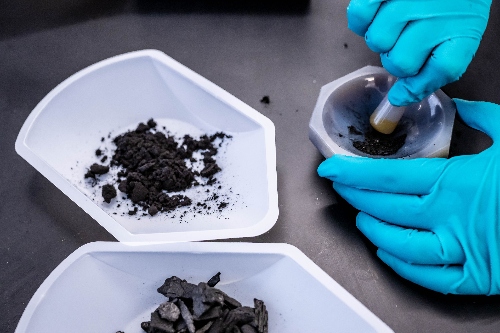
In its research, the UBC team said its photocatalyst hybrids were prepared using “a frugal approach” that combines the advantages of iron oxide, known for its photoactivity and ability to drive charge separation, immobilized on mesoporous carbon, enhancing adsorption kinetics and providing numerous active sites for catalysis.
The UBC research was supported by a Natural Sciences and Engineering Research Council of Canada (NSERC) Discovery grant and was recently published in Nature Communications Engineering.
The UBC team believes its catalyst could be a low-cost, effective solution for municipal water systems and specialized industrial waste stream cleanups. They have already set up a company, ReAct Materials, to explore commercial options for the technology.




