

The changing landscape of compounds of emerging concern (CECs), pathogens, and disinfection byproducts (DBPs) in drinking water, as well as increasingly restrictive discharge limits for receiving waters and the need to diversify water supplies through potable reuse, have necessitated a shift beyond conventional treatment. Advances in treatment technologies expand available water supply by making less pristine water sources economically feasible to treat and offsetting demand on traditional potable water supplies.
Advanced treatment strategies go beyond traditional treatment processes, such as the typical treatment train of coagulation, flocculation, and filtration used in drinking water utilities or the preliminary, primary, and secondary treatment used in wastewater utilities. These processes take treatment to a higher level. Drinking water plants may employ advanced treatment processes such as carbon adsorption, membrane treatment, ozone, ultraviolet (UV) disinfection, and biofiltration, or a combination of these solutions.
Similar advanced treatment strategies have also been added to wastewater treatment plants to further remove pathogens, salts, nutrients, organic compounds, and other pollutants – often with the goal of producing potable water through indirect or direct potable reuse.
The research
The past three decades have seen a dramatic increase in the development and commercialization of advanced treatment strategies and technologies to improve water quality. Since the 1980s, the Water Research Foundation has kept pace with these developments, funding over 200 projects to help utilities understand, implement, and benefit from advanced treatment methods and technologies.
Subscribe to our Newsletter!
The latest environmental engineering news direct to your inbox. You can unsubscribe at any time.
Biofiltration
Biofiltration, also known as biological filtration or biologically active filtration (BAF), is the process of allowing microorganisms to colonize water plant filters to remove biodegradable compounds from water. The microbial growth attached to the filter media (biofilm) consumes the organic matter that would otherwise flow through the treatment plant and ultimately into the distribution system.
The role of biofiltration in water treatment has expanded beyond the removal of biodegradable organic matter and turbidity control to include the removal of compounds such as pharmaceuticals and personal care products (PPCPs), disinfection byproducts, inorganic compounds, and more. Since many utilities already operate conventional granular media filters, converting the filters to biological mode can extend the bed-life of the filters while meeting water quality objectives without additional capital investments.
In 2018, the Water Research Foundation (WRF) released Simultaneous Removal of Multiple Chemical Contaminants Using Biofiltration to help water utilities achieve maximum simultaneous removal of several chemical compounds using biofiltration without compromising existing objectives of the filtration process.
The report identifies key design and operational parameters that influence the simultaneous removal of multiple or recalcitrant compounds. It includes a multi-contaminant removal matrix that provides a snapshot of anticipated multi-contaminant removal ranges given various sets of operating and design conditions. The matrix can be used to assess which compounds might be removed and the degree of removal that could be expected for a given set of conditions.
Membrane treatment
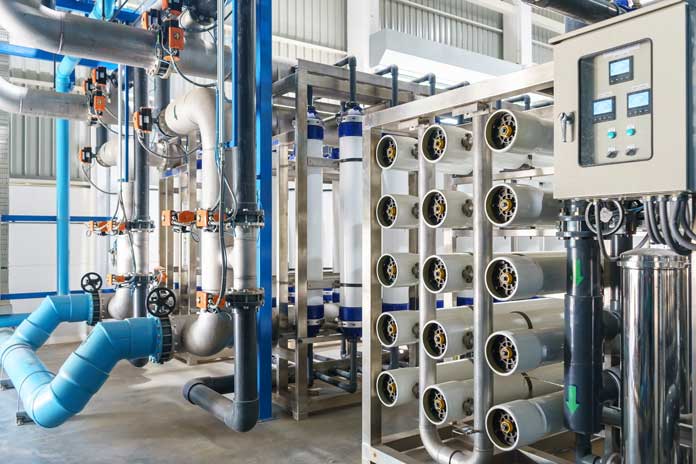
The use of membranes for water treatment has risen significantly in recent decades. Membrane processes include low-pressure membranes, such as microfiltration (MF) and ultrafiltration (UF), and high-pressure membranes, such as nanofiltration (NF) and reverse osmosis (RO). Advances in membrane treatment technology will continue to allow utilities to develop their less desirable water supplies.

WRF’s 2005 study, Development of a Microfiltration and Ultra-filtration Knowledge Base, consolidates knowledge on the use of MF and UF membranes in drinking water treatment into a searchable database. The resulting report explains the membrane industry, identifying trends in the application of membranes, and provides a reference for drinking water providers considering membrane treatment. The knowledge base allows utilities to easily extract information pertinent to their specific application needs and answer questions about MF and UF industry development trends. This provides a platform to further advance the development and application of these technologies.
Despite their numerous known benefits over polymeric membranes, there was, for a time, a lack of knowledge and drinking water industry experience with ceramic membranes. Applicable research studies that demonstrate whether ceramic membranes can meet current drinking water quality standards are limited. Far less is known about optimizing the chemical pretreatment scheme for ceramic membrane systems or even the primary mechanisms responsible for fouling of ceramic membranes.
Released in 2014, Coagulation-Ceramic Membrane Filtration for Surface Water Treatment, sheds light on pretreatment conditions, fouling mechanisms, and contaminant removal capabilities. The study investigates pretreatment with aluminum sulfate, aluminum chlorohydrate, and ferric chloride, finding aluminum sulfate and ferric chloride to be superior at removing DBP precursors and reducing the rate of membrane fouling.
Ozone
In 1986, many water utilities began to reexamine their water treatment processes and became interested in ozone treatment because of its strong disinfection capabilities and notably lower levels of regulated DBPs.
In 1991, WRF published Ozone in Water Treatment: Application and Engineering, which includes information on the design, operation, and control of the ozone process within drinking water plants. The report applies almost 100 years of European ozone design and operations experience to the North American regulatory and utility environment. The report is essential to all water utilities, design engineers, regulators, and plant managers and supervisors interested in effectively implementing ozone.
PPCPs and endocrine disrupting compounds (EDCs) in water and wastewater are largely unregulated, but their ubiquity has necessitated studies on the efficacy of various treatment processes for their removal, including ozone. Since municipal wastewater is considered a primary source of PPCPs and EDCs in the environment, expansion and optimization of wastewater treatment processes may be the most efficient strategy to mitigate the potential effects of these compounds. Ozone is a unique option because its efficacy is similar to that of high-pressure membranes and advanced oxidation processes for the reduction in PPCPs and EDCs.
Results from Use of Ozone in Water Reclamation for Contaminant Oxidation, released in 2014, characterize the use of ozone in wastewater treatment applications with respect to bulk organic matter transformation, contaminant oxidation, microbial inactivation, and the formation of disinfection byproducts and other transformation products.
This study demonstrates ozone’s ability to reduce estrogenicity of secondary effluent, which has direct implications for discharge to environmentally sensitive surface waters. Ozone is also an effective disinfectant, which translates to public health benefits in recycled water applications where direct contact is possible.
Ozone can be used simply to oxidize a wide range of compounds, microbes, and bulk organic matter to increase the chemical, microbiological, and aesthetic quality of the effluent in a conventional wastewater treatment plant. This research also features cost estimates for the use of ozone in advanced treatment processes and hypothetical treatment trains.

UV disinfection
UV disinfection is considered an effective component of the multi-barrier approach to controlling pathogens in drinking water. WRF has funded more than 50 UV projects over the past several decades. In 2012, WRF published the UV Disinfection Knowledge Base.
At over 500 pages, it incorporates utility experiences with facility design, validation, operations and maintenance issues, costs, lamp breakage, aging, etc. This compilation helps utilities, engineers, and regulators improve their understanding of UV disinfection and thereby reduce the risks and costs of applying UV.
Potable reuse
In 2011, many utilities that had been exclusively using indirect potable reuse (IPR), where treated wastewater passes through an environmental buffer before rejoining the drinking water supply, began exploring direct potable reuse (DPR), where purified wastewater is introduced into a drinking water treatment facility or directly into the water distribution system. Implementing DPR, and eliminating the environmental buffer, offers potential operational advantages as well as benefits to a utility’s bottom line. However, many utilities had questions about the most effective treatment options.
To provide solutions, WRF launched a multiphased research project to explore the benefits and tradeoffs of various treatment process trains. The resulting series of reports, Examining the Criteria for Direct Potable Reuse, released between 2012 and 2016, contains criteria for assessing the effectiveness of different advanced treatment trains, taking some of the top microbial and chemical concerns into consideration and introducing a model to weigh the options.
The research effort includes the pilot of an advanced treatment train for DPR under realistic operating conditions, showcasing the potential for DPR use. The water quality criteria developed in this project have been used by several jurisdictions that are either developing or are planning to develop water quality criteria for potable reuse.
Because the bar for potable reuse treatment practices is often higher than that of other water sources, WRF helps utilities keep up with a stricter set of demands. WRF research drives leading-edge advances in treatment and technology, including membrane- and non-membrane based treatment options, helping to improve treatment and ensure contaminants are properly managed.
In 2016, WRF took instrumental steps in establishing best practices for DPR by demonstrating the reliability of multiple treatment processes to meet the highest water quality standards. Critical Control Point Assessment to Quantify Robustness and Reliability of Multiple Treatment Barriers of DPR Scheme pinpoints the elements in a treatment train that are most important to ensuring water safety and uses full-scale operating data to evaluate the ability of those points to remove chemical and biological contaminants in potable reuse.
Findings suggest that both membrane- and non-membrane-based potable reuse systems are capable of effectively managing microbial and chemical contaminants with proper monitoring and operational practices.
Although many treatment strategies for potable reuse rely on reverse osmosis (RO), alternatives to RO can also achieve potable water quality in potable reuse scenarios. Another option, combining ozone with BAF, can yield a viable, alternative water supply, and is already an accepted drinking water treatment process because it is sustainable and can be used to remove pathogens and a variety of organic compounds.
In 2018, WRF released findings from a study that looked at the feasibility of DPR using ozone-BAF treatment without RO to achieve potable quality water. The study, Ozone Biofiltration Direct Potable Reuse Testing at Gwinnett County not only showed that ozone-BAF could provide high-quality water, but it could do it at less than half the cost of RO-based treatment where RO concentrate is processed through mechanical evaporation.
By comparing IPR to DPR in one area, several potential operational benefits were identified for DPR including reduced ozone demand, lower filter headloss accumulation rates, and mitigation of source water quality excursions.
LIFT
For potable water uses, municipal wastewater can also be treated to such standards using a selection of advanced treatment processes through either direct or indirect potable reuse. LIFT’s Water Reuse Focus Group was formed to investigate more efficient membranes and other novel treatment processes to decrease energy usage and treatment costs, real-time monitoring of contaminants using advanced sensors, and other technologies aimed at making water reuse more widespread.
What’s next?
Currently available design and validation protocols for UV disinfection systems do not account for many factors that are known to influence process performance, such as dose distribution. This leads to system designs that are inefficient and overly conservative. These attributes are particularly important among large UV disinfection systems with high flow rates or large UV dose requirements, which may be necessary in water reuse applications. Under these circumstances, opportunities for optimization of system sizing and operation are likely to be greater than for smaller systems.
An ongoing WRF project, Design and Validation Protocol for UV Disinfection Systems Used in Municipal Wastewater Treatment and Reuse Applications will combine physical measurements with numerical modeling to develop design and validation protocols to optimize UV disinfection systems.
Physical experiments include measurements of several water quality characteristics that are known to influence UV process performance, including flow rate, UV transmittance, particle concentration, UV dose-response behaviour, and others. In addition, pilot-scale and full-scale experiments will be conducted on operating UV disinfection systems to provide fundamental data regarding the behavior of these systems.
This article appears in ES&E Magazine’s October 2019 issue.




