Major federal, provincial, and municipal investments are flowing across Canada, with a significant boost announced for the Village of Lytton, British Columbia, as it continues to rebuild its wastewater treatment plant after a devastating 2021 wildfire.
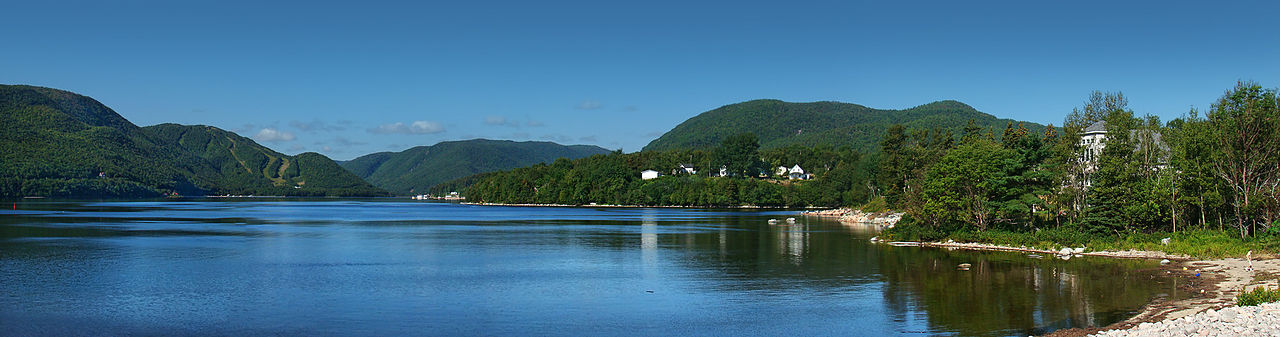
The funding comes alongside new infrastructure investments in Prince Edward Island aimed at unlocking hundreds of new housing units, underscoring the growing national focus on resilient water systems to support both recovery and growth. Additionally, a new membrane bioreactor (MBR) wastewater treatment plant is finally being realized after 35 years of discussion within the Municipality of Victoria County, serving South Ingonish Harbour in Nova Scotia.
In B.C., more than $7.5 million in joint funding has been committed to upgrade the Lytton wastewater treatment plant. The project will replace failing and fire-damaged infrastructure, modernize operations, and improve wastewater quality before discharge into the Fraser River.
Upgrades include the installation of a supervisory control and data acquisition (SCADA) system to improve monitoring and process control, a new back-up power supply, and treatment enhancements designed to increase reliability and resilience. While the wastewater treatment plant survived the 2021 fire, officials say the improvements are critical to meeting future capacity needs as rebuilding continues.
Subscribe to our Newsletter!
The latest environmental engineering news direct to your inbox. You can unsubscribe at any time.
“Reliable wastewater treatment helps communities stay healthy,” said Gregor Robertson, Minister of Housing and Infrastructure. “Taking action through projects like this one strengthens communities and puts resilience at the forefront. We are committed to collaborating with our partners to support initiatives that help the Village of Lytton rebuild towards a safer and cleaner future.”
The federal government is investing $3 million through the Green Infrastructure Stream of the Investing in Canada Infrastructure Program. The Government of B.C. is contributing $2.5 million, with the Village of Lytton providing $2 million.
The Green Infrastructure Stream supports projects that enhance climate change preparedness, reduce greenhouse gas emissions, and advance cleaner and more sustainable infrastructure systems.
Meanwhile, on P.E.I., more than $8.6 million in joint federal-provincial funding has been announced to support water, wastewater, and stormwater infrastructure at the Hillsborough Park Development — laying the groundwork for up to 525 mixed-market housing units.
The project includes construction of a wastewater lift station and installation of approximately 150 metres of wastewater forcemain, 1,684 metres of sanitary pipe, 1,763 metres of water pipe, and 2,901 metres of stormwater pipe, along with manholes and three large catch basins of roughly 600 m².
Funding is being delivered through the Canada Housing Infrastructure Fund (CHIF), with Canada contributing $4.3 million through its provincial and territorial agreement stream, matched by an equal investment from the P.E.I. Housing Corporation.
Part of Budget 2024, CHIF is investing up to $6 billion nationwide to support the construction and upgrading of core public infrastructure needed to enable housing growth and densification in communities across Canada.
Nova Scotia greenlights WWTP
Components of the collection system and modular plant are being delivered and preparations continue for installation, following Nova Scotia’s formal approval for the construction of the Ingonish Wastewater Treatment System in late 2025.
The treatment plant tank recently arrived from Granby, Quebec, and has been buried on site, local officials announced. Additional materials, including the modular treatment plant and concrete manholes continue to arrive, as crews prepare for installation.
While construction continues on the first phase, planning and design work are advancing for the next stage of the project. Phase two will extend the collection system north around the harbour to the Parks Canada boundary. Detailed design work is expected to continue into early 2026, followed by a public tender in the spring.
A second treatment plant has also been ordered and is scheduled for delivery in third quarter of 2026, keeping the project on track for full completion by late 2026.
“This approval marks a major milestone for the project that aims to modernize wastewater services, protect the local environment and support community growth,” local officials announced in a bulletin to residents.