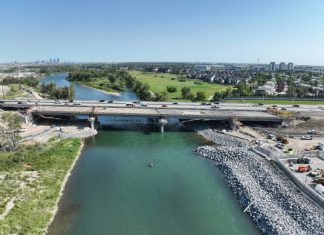


Metro Vancouver officials say a new approach to upgrades at the Iona Island Wastewater Treatment Plant (WWTP) will cut the project’s pricetag by $4 billion and prioritize measures necessary to achieve secondary treatment by 2030.
The project in Richmond, B.C., will now shift from the 2022 plan of building an entirely new facility to rehabilitating the existing primary treatment plant through phased upgrades to a secondary treatment level. It’s an approach made possible, local officials said, through the use of modular, space-efficient wastewater treatment technology, which officials also note allows them to more efficiently manage supply chain and market constraints than the previous single-phase approach.
“In the past year, we’ve selected a technology that has given us an opportunity to rescope the Iona project to something we can deliver for $6 billion, a reduction of almost $4 billion compared to the previous project over the same time period,” announced Metro Vancouver Board Chair Mike Hurley in an early October statement.
The board acknowledged that short-term savings could be diminished by the more long-term impacts of a phased approach which defers certain upgrades, and also opens up potential fines for non-compliance if deadlines aren’t met.
The 1963 Iona WWTP is one of only a few full-size primary treatment wastewater plants operating in North America. It serves some 750,000 residents in the Vancouver Sewerage Area. The longer timeframe with the new phased upgrades — an additional five years to about 2040 — puts the facility at risk of missing provincial compliance deadlines for stricter secondary treatment. Both federal and provincial regulations require compliance by 2030. Provincial and federal regulations have similar requirements for effluent quality, but the provincial regulations focus on daily concentration limits, while the federal regulations focus on monthly average concentration limits. The region has written to the federal government to get an extension for the compliance deadline, but has yet to receive a response.
As it stands, the new plan aims to meet federal compliance earlier than previously expected, but still beyond the deadline.
Subscribe to our Newsletter!
The latest environmental engineering news direct to your inbox. You can unsubscribe at any time.
The region’s selection of membrane bioreactor technology, however, will allow the Iona WWTP to provide secondary and tertiary level of effluent with one technology. The board says it hopes a blended effluent will ultimately be of higher quality. It is anticipated that secondary treatment at Iona will remove an additional 53 tonnes per day of total suspended solids that would otherwise be discharged to the Strait of Georgia.
“The provincial regulations have an additional requirement above what is required by the federal regulations related to the quantity of treated effluent,” states an October 3 board report. “Metro Vancouver will be able to achieve a portion of this requirement with the recommended approach and the opportunity to request that the Province align provincial wastewater effluent regulations with federal wastewater effluent regulations.”
Additionally, the Greater Vancouver Sewerage and Drainage District Board board realizes that B.C. may not accept aligning with federal regulations and delays will be incurred with associated risks of regulatory noncompliance.
The new plan would also prioritize delivery of project components to meet regulatory compliance, such as: solids handling to accommodate added loading from secondary treatment; access and utility upgrades; onsite resource recovery necessary for plant operations; and ecological projects related to permits.
“The updated approach is an innovative way to make sure we’re meeting our regulatory requirements, protecting the health of the environment, and being mindful of what residents are able to contribute financially to this important project,” said Liquid Waste Committee Chair Malcolm Brodie. “While we understand that deferring projects is never ideal, we had to make an important decision about what we could afford to do all at the same time.”

Early works and key activities to support construction of the Iona WWTP that have been completed or are currently underway include:
- Securing $500 million in provincial ($250 million) and federal ($250 million) funding
- Building a secondary treatment pilot plant
- Constructing Iona Island causeway utility and road improvements, supported by $500,000 in additional provincial active transportation funding
- Completing Ferguson Road utility and road improvements in collaboration with the Vancouver Airport Authority (YVR)
- Designing and procuring electrical equipment for backup power to the existing treatment plant and transitioning power supply to the new upgraded treatment plant
- Conducting a barge berth selection study (in progress)
- Removing stockpiled biosolids accumulated since the primary plant was commissioned in 1963
- Cleaning sludge lagoons