

The second stage is a larger footprint organic media biofilter sized for a media contact time of approximately 60 seconds, requiring an overall footprint of 180 m2. The longer contact time serves to polish the remaining hydrogen sulphide. It also accommodates any volatile organic compounds and additional odour compounds in the foul air stream. An organic media unit is sufficient here as the hydrogen sulphide concentrations are significantly less, at approximately 5 – 50 ppm.

These lower concentrations will not impact the normal operating lifespan of the biofilter media. This biofilter consists of an HDPE liner with perforated incoming air pipe embedded in a drain rock media layer for air distribution. The organic wood chip media depth is 1.08 m and has both in-bed drip irrigation and top spray irrigation.
Results
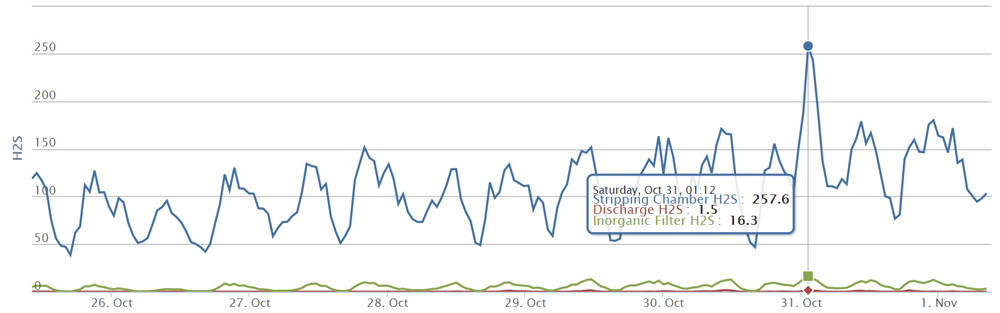
The South Red Deer Regional Wastewater System went into operation in August 2015 and the resulting outflows from the Penhold lift station (the last lift station upstream of the odour management facility) have averaged approximately 7,500 m3/day. The removal rate of hydrogen sulphide has been approximately 99% since the installation of the organic media, with an average discharge hydrogen sulphide concentration below 2 ppm.
James Coates, M.Sc., EIT is with Stantec Consulting Ltd. This article appears in ES&E Magazine’s November/December 2015 issue.
Subscribe to our Newsletter!
The latest environmental engineering news direct to your inbox. You can unsubscribe at any time.




