

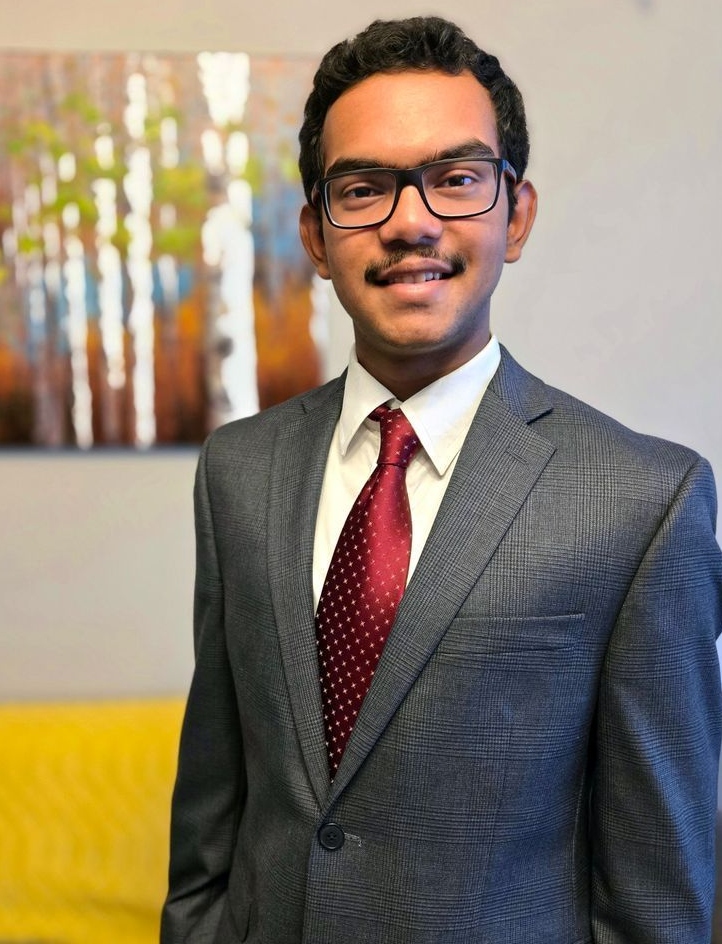
Winnipeg Grant Park High School student, Aiyaan Faisal, is currently representing Canada in Sweden as the national finalist for the 2025 Stockholm Junior Water Prize.
Faisal joins young innovators aged 15-20 from nearly 40 countries. During World Water Week from August 24–28, participants will share their research, attend ceremonies, and engage with international peers, leading scientists, and even members of Swedish royalty.
Faisal’s journey from Grade 12 to the international finals has been supported by Canada’s five member associations of the Water Environment Federation (WEF), according to a press release from the Water Environment Association of Ontario.
“Learning about hydropower’s vulnerability to climate change led me to attempt seeing how Lake Winnipeg, a vital lake in my province, would experience increased evaporation,” explains Faisal in his submission to the competition. “In answering this question, I faced challenges with data availability, which led me to explore deep neural networks as a possible solution for assessing changes.”
Subscribe to our Newsletter!
The latest environmental engineering news direct to your inbox. You can unsubscribe at any time.
Faisal’s award-winning project, Out of the Deep End: Assessing the Impacts of Climate Change in Lake Winnipeg’s Evaporation with Neural Networks, uses advanced deep learning models to predict how climate change could alter evaporation rates in Lake Winnipeg’s southern basin. His research suggests evaporation could increase by as much as 30% by the end of the century, a finding with far-reaching implications for ecosystems, irrigation, fisheries, and hydropower around the world.
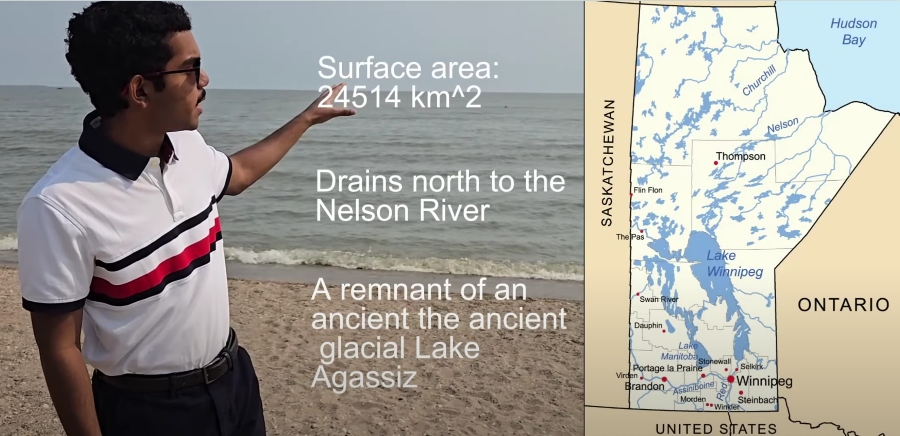
Increasingly high temperatures create vulnerabilities for hydropower that accelerate evaporative loss, Faisal suggests.
“This loss reduces the effective head — the difference between upstream water surface elevation and turbine elevation — weakening hydropower potential,” Faisal states in his submission.
Faisal made it to the finals after competing against Canadian students from Grades 10 to 12, who last spring submitted projects to address urgent water challenges. At the Canada-Wide Science Fair, other finalists included a project on harnessing wave energy for sustainable water desalination by Alberta students Aaron Dias and Esam Taher, as well as a project on microplastic intrusion in salt marsh sediments by New Brunswick student Willow Pass.
Faisal’s project is available for download here.




w aiyaan