

Even after more than $1.5 billion in improvements to the Seine River, heavy rains continue to create fluctuating bacteria levels that are raising questions around whether water quality levels are safe for Olympic swimmers.
World Aquatics made the decision to cancel several test runs of the marathon swimming course in the Seine River after 3 a.m. daily testing over the first weekend in August revealed elevated levels of E. coli and enterococci, according to monitoring group Eau de Paris.
Just days before, Belgium’s Olympic committee announced that it would withdraw its team from the mixed relay triathlon at the Paris Olympics after one of its competitors who swam in the Seine River fell ill. Additionally, Swiss officials said that a triathlete who swam in the Seine also fell ill.
Under guidelines from regulator World Triathlon, E. coli levels up to 1,000 colony-forming units per 100 millilitres can be considered “good” and can allow competitions to go forward.
Subscribe to our Newsletter!
The latest environmental engineering news direct to your inbox. You can unsubscribe at any time.
Typically, swimming in the river is considered illegal due to bacterial levels. But cleaning up the Seine was a centerpiece of the city’s successful bid to host the games.
Like many cities, Paris utilizes a combined sewer system vulnerable to heavy rains.
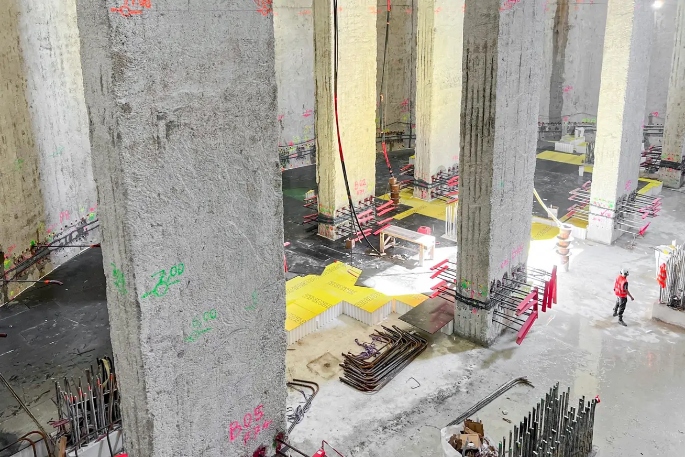
Prior to the Olympics, local officials constructed a massive underground storage reservoir to collect excess rainwater and stop untreated wastewater from entering the Seine. Dubbed Bassin d’Austerlitz, it has the capacity to hold the equivalent of 46,000 m³ of water, or more than 12 Olympic swimming pools. The reservoir took 3.5 years to build.
“In addition to the structural challenge of the rainwater basin, a 600 metre-long tunnel with a diameter of 2.50 metres was also built leading into the tank, acting as a channel to allow water to flow out,” stated building technology company Max Frank in statement, referring to the water flowing beneath the train station to a treatment plant.
A new water treatment plant in Champigny-sur-Marne, east of Paris, was also inaugurated before the Olympics began.
Just prior to the start of the Games, Paris Mayor Anne Hidalgo took a dip in the Seine River, fulfilling a promise to show that the waterway was clean enough to host swimming.
By summer 2025, the city plans to open three public swimming spots along the river.
Los Angeles, which will host the 2028 Olympics, has sent water and sanitation officials to Paris to study the Seine cleanup.




