

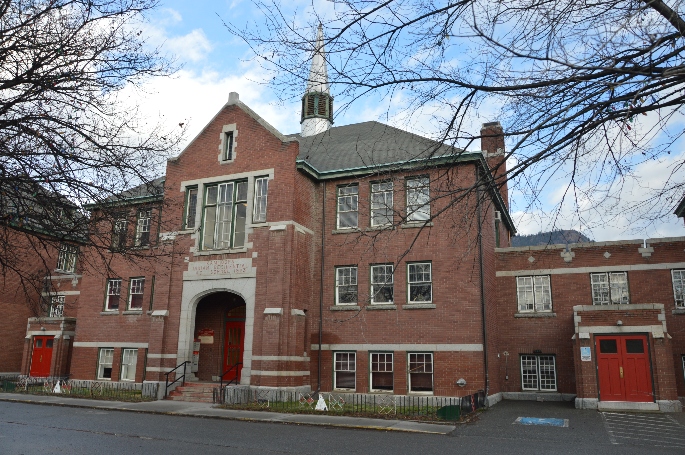
A federal investment of $1 million will be used to develop a natural detention pond on the property of a former First Nations Residential School building, where it will help manage urban runoff in the British Columbia community of the Tk’emlups te Secwepemc (TteS) in Kamloops.
The red brick heritage building site for the former school is known as the Chief Louis Centre. The detention pond built on its property will slow the flow of runoff entering the South Thompson River, reduce peak flow rates into the river to prevent flooding, address existing bank erosion, and mitigate any future erosion, announced Housing, Infrastructure and Communities Canada.
In addition to new green infrastructure, the project has placed “public use and community social interactions at the core of its design,” federal officials announced. New features will include trails, interpretive signage and benches around the perimeter to allow the general public to interact with the property’s new waterfront feature, which will also provide habitat for local wildlife.
“Integrated stormwater management is a meaningful component of a broader holistic approach that TteS is taking on as stewards of the environment,” announced local Chief Rosanne Casimir, whose community is contributing an additional $400,000 to the project. “Respect for the land, water, air, and all people are foundational to building good relationships where we all benefit and succeed.”
Subscribe to our Newsletter!
The latest environmental engineering news direct to your inbox. You can unsubscribe at any time.
The school operated between 1890 and 1969, when the federal government assumed control and ran the facility as a day school for another nine years. It was formally closed in 1977, but remains accessible for local tours. Now it is the center of Indigenous culture with its Secwépemc Museum, Heritage park and Pow Wow circle.
The local community is currently in the midst of determining a potential new use for the building. The Tk’emlups te Secwepemc has considered it as a gathering space, as well as for recreational, retail and commercial purposes.
The project will be made possible through the Natural Infrastructure Fund, which supports projects that use natural or hybrid approaches to increase resilience to climate change, mitigate carbon emissions, protect and preserve biodiversity and wildlife habitats, and promote access to nature.




