

Iran’s already strained water supply has become entangled in escalating regional tensions, with desalination plants emerging as a potential vulnerability amid recent military exchanges.
In early March, Iran’s foreign minister accused the U.S. of bombing a desalination plant on Qeshm Island, an attack he said disrupted drinking water supplies to 30 villages and violated international law that grants special protection to civilian water infrastructure.
The U.S. government denied responsibility for the strike. Still, Iran’s foreign minister, Abbas Araghchi, argued on social media that the incident set a troubling precedent, writing that “the U.S. set this precedent, not Iran.”
The following day (March 8), the dispute took another turn when Bahrain announced that one of its own desalination facilities had been struck by an Iranian drone.
Subscribe to our Newsletter!
The latest environmental engineering news direct to your inbox. You can unsubscribe at any time.
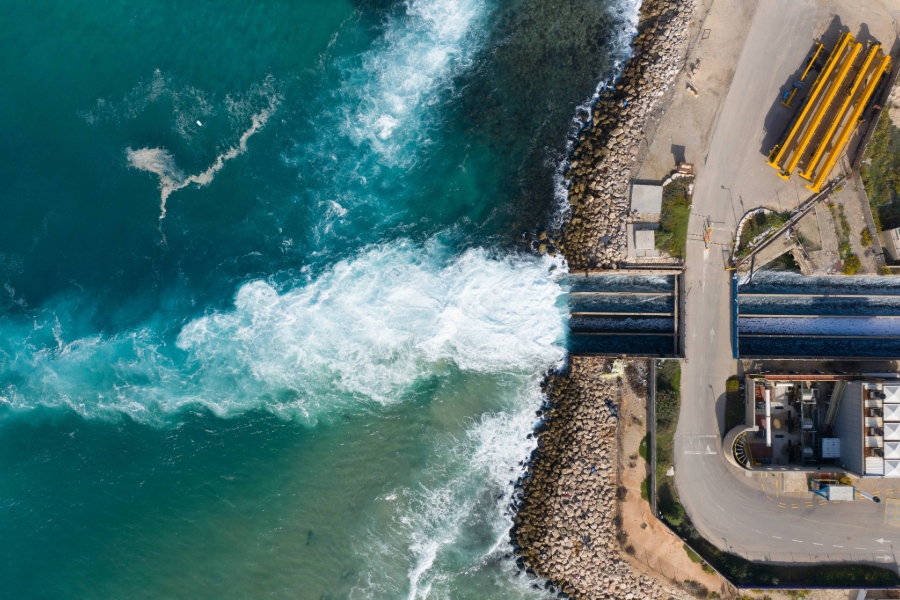
The exchange has drawn attention to the strategic importance — and vulnerability — of desalination infrastructure in the Middle East. Desalination plants remove salt from seawater, and in some cases treat brackish groundwater or river water, providing a critical source of drinking water for countries with limited freshwater resources.
While Iran currently relies on only a handful of desalination plants to supply a relatively small portion of its national water demand, that dependence could grow rapidly as the country’s traditional water sources come under increasing strain. Reservoirs across Iran have been falling to critically low levels, raising the likelihood that desalination will play a larger role in the country’s water security.
Israel provides a clear example of how central desalination can become. The country operates five major plants that together supply up to 80% of its domestic water. However, the concentration of production in a small number of large coastal facilities also creates potential weak points during periods of conflict.
Across the wider Gulf region, desalination is already a cornerstone of water supply. Gulf states collectively produce about 40% of the world’s desalinated water through more than 400 plants.
Iran’s water challenges, however, long predate the recent military tensions. A 2024 study examining 1,700 groundwater reserves in 40 countries found that 32 of the world’s 50 most over-pumped aquifers are located in Iran, highlighting the scale of groundwater depletion across the country.
The country has also pursued an aggressive dam-building strategy for decades, becoming one of the world’s most prolific builders of large dams, many on rivers too small to reliably sustain them. As a result, reservoirs feeding roughly 500 dams have increasingly run dry.
The pressure is especially acute in Tehran. The Iranian capital, home to roughly 10 million people, has endured years of drought and has limited access to natural freshwater sources. By late 2025, national rainfall levels had dropped to 45% below normal, leaving the dams and reservoirs supplying the city operating at minimal capacity.
Water demand in the city has also surged. According to the Centre for Strategic and International Studies, Tehran’s water consumption has grown even faster than its population, rising from 346 million m³ per year in 1976 to 920 million m³ in 2001, and reaching roughly 1.2 billion m³ annually today.
The problem has gotten so bad that in late 2025 Iranian leaders said they were considering moving the capital city further south.
As regional tensions simmer and water supplies continue to tighten, analysts say the growing reliance on large-scale desalination facilities could turn essential infrastructure into a new strategic flashpoint in an already volatile region.




