

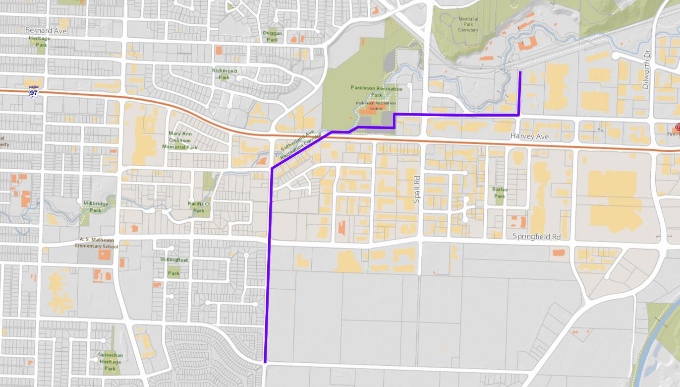
The City of Kelowna has undertaken a $7-million initiative to repair 2.7 km of sanitary sewer pipe using cured-in-place pipe (CIPP) technology from late April through June.
This trenchless for the Burtch Sanitary Trunk upgrade project involves inserting a resin-soaked liner into the existing pipe and curing it with steam, forming a new, hardened internal pipe, explained Dylan Wilson, senior project manager with City of Kelowna.
“Normally a sanitary sewer pipe repair of this scale would take the entire construction season and require excavation of the existing pipe and installation of a replacement, bringing invasive impacts for residents and commuters,” Wilson announced in a statement. “By using a trenchless technology, we are able to complete the repair with significantly fewer impacts on residents and at a much lower cost.”
The Burtch Sanitary Trunk is a critical element of the City’s wastewater infrastructure and is currently in need of immediate repair due to hydrogen sulfide degradation within the existing concrete pipe.
Subscribe to our Newsletter!
The latest environmental engineering news direct to your inbox. You can unsubscribe at any time.
Deterioration in the walls of the concrete pipe was identified in certain sections after video inspection.

City staff evaluated multiple options and concluded that traditional replacement would be complex, expensive, and time-consuming, particularly because the repair path intersects Highway 97, major roads, Parkinson Park, riparian areas along Mill Creek, and other critical buried utilities.
“Repairing and maintaining our underground infrastructure is crucial for community health, to protect our environment and to safeguard surrounding infrastructure,” added Wilson.
Benefits of utilizing this trenchless technology include its modest cost compared to a traditional excavate and replace method, accelerated timeline to project completion, as well as significantly reduced public disruption.
To insert the liner, sewer flow must be diverted and bypassed through two overland pipes, which will be monitored around the clock to ensure proper function.
While most bypass pipes will be laid overland, they will be trenched underground at major intersections
This project aligns with the City of Kelowna’s 2040 Official Community Plan, ensuring fiscally responsible management of infrastructure and its commitment to protecting land, water and air.
This summer, the city will also begin work on an extension to the Glenmore sanitary trunk main, to help keep pace with population growth.




