By Brian Kut
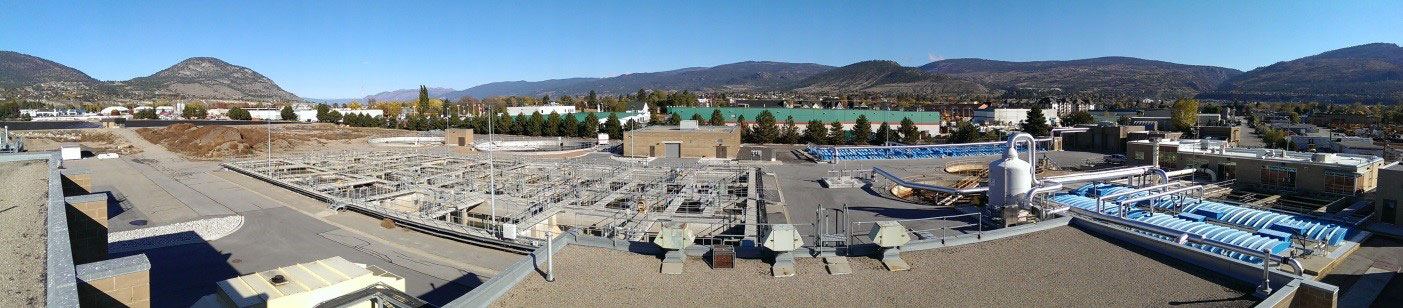
Ensuring Penticton adheres to stringent federal and provincial wastewater regulations is top priority for the small team of 11 staff and seven operators at British Columbia’s Penticton Wastewater Treatment Plant, which serves the city’s 33,500 residents. Along with that responsibility comes the data management and report generation that are not only job functions or requirements, but crucial to better understanding overall water quality.
Gathering and packaging that data in a reliable and efficient way means it can be readily shared, interpreted and analyzed by those who need to see it. Not only is such information and reporting essential for day-to-day decisions the team makes about wastewater, it is especially important when an unexpected or critical situation might demand a swift response.
New approach needed
Before January 2018, the team had been managing its data using Microsoft Excel—a suitable program for many functions, but without the specificity that could offer real and timely insights into the wastewater data being collected.
Subscribe to our Newsletter!
The latest environmental engineering news direct to your inbox. You can unsubscribe at any time.
“Excel is great for storing data, but it’s much more difficult to use it for reporting or QA/QC. There was a lot more copying and pasting, and things just weren’t as efficient,” says Randy Craig, wastewater treatment plant supervisor. “Data accessibility was also an area we were struggling with.”
The system in place was also proving especially challenging for generating reports, with Environmental Management System (EMS) reporting sometimes taking up to one full day of work for an employee.
In late 2017, the team concluded that a new and better system for managing the plant’s data was necessary. After exploring various solutions, they settled on WaterTrax, a software product by Aquatic Informatics, which operates in 60 countries.
The software was subsequently set up in late 2017 and launched in January 2018.
The results
Almost overnight, the team noticed an immediate difference not only in functionality, but in the new-found power of the data and reporting tools they had at their fingertips.
Craig says WaterTrax has greatly improved the plant’s data management practices. “We now have better access to data. As a manager, I can check things even when I’m on vacation, and have better oversight into what’s going on.”
He cites an alerting feature in the software as a key factor in ensuring data integrity.
“If parameters are off, with WaterTrax our team can see right away when there has been an entry error and get that corrected much faster than under the previous system,” he says. “The alerts allow us to dig into it immediately. So, in that way it has really helped improve data accuracy.”
From a data management side, the team has also noticed a marked difference.
“It has been easier to generate our reports and we’ve seen an improvement in data transfer within our department as well,” says Jenna Sawri, an operator at the plant. She characterizes the EMS process before the new solution was introduced as “just a mess”. Under the previous system, when mistakes happened it was difficult to work through them all. With the software, the whole process takes her only 30 minutes.
As just one example of the huge time-saving efficiencies, Sawri highlights that the EMS reporting tool alone has provided a 94% efficiency gain.
Beyond wastewater
“WaterTrax is now a part of everyone’s daily life on the team and makes all our job functions easier, especially reporting. We’ve seen the real benefits it has brought, not only for our department but our plant overall,” says Sawri.
Sawri and the team are so pleased with the solution’s data management and reporting capabilities, which has allowed them to spend more time on other critical functions such as assessing the data, that they are advocating for other water departments within the City of Penticton to consider adopting the solution as well.
Brian Kut is with Aquatic Informatics. This article appears in ES&E Magazine’s December 2019.