

For a community that has struggled to maintain reliable drinking water, federal funding of more than $214 million will allow the City of Iqaluit to build a new reservoir over four years that will be able to draw water from one of two long-term alternative sources.
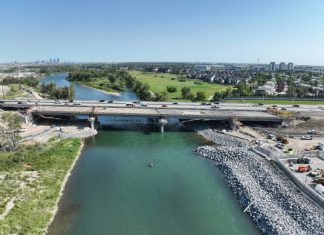
The new project, delivered through the Disaster and Mitigation Adaptation Fund, will improve the city’s water distribution system and water supply system through the excavation and creation of the new reservoir adjacent to Lake Geraldine, which is planned to hold about 1.8 billion litres.
By 2040, it’s estimated that the amount of water storage needed in Iqaluit will more than double what is currently available from Lake Geraldine. Local officials believe the reservoir — expected to cost $64-million — can change all that, particularly when lake water is partially locked up in the winter months.
The city previously completed a feasibility study of its Unnamed Lake as one potential alternative water source, and is also looking at the Sylvia Grinnell River as a long-term option. The average person in Iqaluit uses about 400 litres of water a day, according to the city.
Subscribe to our Newsletter!
The latest environmental engineering news direct to your inbox. You can unsubscribe at any time.
“This announcement is a game changer for the City of Iqaluit and represents important and tangible steps towards addressing critical issues, including water shortages, housing and development limitations faced by Iqalummiut and Nunavummiut,” announced Mayor Kenny Bell in a statement. “Thank you for your investment, in our future and our wellbeing,” he added.
Of the three excavation options Iqaluit city council explored in 2020, the berm reservoir for Lake Geraldine was by far the least expensive solution. It will be designed and built to mitigate current and future impacts of climate change, local officials said.
Additionally, the new funding will be used to address permafrost degradation from climate change, which has impacted Iqaluit’s piped water infrastructure and caused water loss, frequent drinking water disruptions and boil water advisories. The funding will allow for the replacement and modernization of the impacted infrastructure.
Over the fall of 2021 and into the winter season, Iqaluit struggled with petroleum hydrocarbon concentrations in the water supply. Residents spent two months with little access to local water, followed by six weeks of a boil water advisory after residents noted lingering fuel smells.
An investigation determined that an old underground fuel storage tank may have leaked adjacent to the water treatment plant. The tank was removed and the spill was remediated, but the community asked for more sustainable long-term solutions.
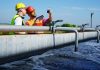
Following the discovery, Iqaluit also installed two real-time water quality monitoring stations to determine water quality parameters and ensure no hydrocarbons remained in the system. The monitoring stations were integrated into the city’s supervisory control and data acquisition (SCADA) system.