

By Mackenzie May
Wastewater collection in cold regions requires additional consideration for the design, installation and operation of a system to ensure cost-effective, uninterrupted service. The primary concern with wastewater collection in cold climates is freezing. Whether the ground is freezing to significant depths, complicating installation and maintenance of a sewer system, or the pipes and components are freezing, leading to blockages, pipe bursts and system failures, cold climates can have an impact on the design, installation and operation of a collection system.
Pressure sewer systems were designed as an alternative for applications where gravity sewer systems were less feasible or economical. It provided a means to combat difficult terrain such as rocky, hilly, or long flat land. The primary differences between conventional gravity sewer systems and pressure sewer systems are in the piping network and the reduction of solids size in wastewater at each residence.
Pressure sewer systems utilize a network of grinder pumps to transport wastewater through small diameter pipes, directly to a sewer main, lift station or treatment system. A grinder pump is a submersible pump designed to reduce particulates in a waste stream into a fine slurry using a grinding mechanism and pump the waste at a high pressure. In order to overcome challenging terrain, pipes are installed just below the frost line and follow the natural landscape.
Subscribe to our Newsletter!
The latest environmental engineering news direct to your inbox. You can unsubscribe at any time.
The frost line is the depth at which the ground freezes in the winter, which varies based on geographic location. This is a critical factor to understand when planning wastewater management systems. It is essential to install pipelines below this line to prevent freezing. Local climate data, soil composition and historical weather patterns can be used to determine the depth.
Frozen grounds pose a challenge to the installation of any collection system by increasing the time and effort required to excavate and lay pipe. Traditional gravity systems require sloped pipes to move wastewater, which requires further extensive excavation and precise grading.
With a pressure sewer system you require smaller diameter piping and can follow the contour of the land, without the need to excavate for deep, sloping, large diameter piping. For a cold climate, this is particularly helpful when dealing with long flat runs of terrain, where gravity systems would require costly lift stations.
Also, they are suitable where the ground composition is something like rock, which makes excavation more difficult. Where possible, collection systems installations can be scheduled during warmer months to avoid challenges such as frozen ground or snow cover.
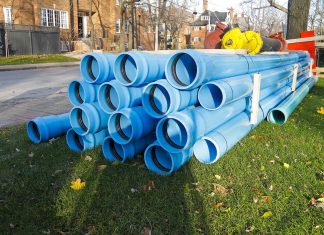
When designing systems for cold climates, proper insulation is critical for preventing the system from freezing. Insulation should be applied to the basin, the cover and all piping in the network. Utilizing pipes with high-density polyethylene may provide additional flexibility and resistance to cracking under freezing temperatures.
Proper insulation not only protects the infrastructure but also extends its lifespan. It is also critical to ensure all joints and connections are properly sealed to prevent water entry, which can freeze and expand, leading to joint failure. Snow coverage also acts as an insulator to underground infrastructure. If there are long bouts of extreme cold weather and no snow, systems are at a higher risk of freezing.
In regions north of the permafrost line, traditional burial methods may not be feasible due to permanently frozen ground. In these areas, above-ground options offer practical alternatives. The grinder pump station and all piping conduits are well insulated in order to prevent freezing.
This becomes a significantly more cost-effective solution compared to a gravity system, as it eliminates the need for excavation completely. The basin and pipelines are equipped with high performance insulation to protect the equipment from harsh weather to maintain operational efficiency.
Once installed properly, a pressure sewer system does not have many operational differences from a climate perspective. Ensuring all components are functioning correctly through regular maintenance checks, particularly before and during the coldest months, can be essential to ensure reliability.
Remote monitoring is also an option which allows for real-time data collection on a system which can alert an operator of potential issues before they escalate into significant problems. The longer wastewater is stagnant in a basin, the greater the risk of freezing. By adjusting the on-off parameters of each station to encourage frequent, short pump run times, we can reduce the retention time and risk of frozen sewage.
Finally, being prepared with emergency protocols and procedures for how to deal with freeze-related incidents will allow an operator to act quickly if or when an incident occurs to minimize damage or environmental impact.
Mackenzie May is with Crane Pumps & Systems. Email: mmay@cranepumps.com
This article appeared in the February 2025 edition of Environmental Science & Engineering Magazine.