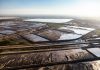
Canada and Manitoba have extended a joint agreement aimed at protecting Lake Winnipeg for another five years, as the federal government announced more than $2.8 million for 16 projects targeting nutrient pollution, water quality and freshwater stewardship.
The Canada–Manitoba Memorandum of Understanding Respecting Lake Winnipeg and the Lake Winnipeg Basin has been extended to August 2031. First signed in 2010, the agreement establishes a framework for federal-provincial cooperation on science, monitoring and measures to improve the health of the lake and its watershed.
The renewed agreement will continue to support scientific research and monitoring, improved understanding of water quality and ecosystem health, nutrient reduction, information sharing and coordination of science activities.
Lake Winnipeg, Canada’s sixth-largest lake by area, has a watershed spanning nearly one million square kilometres across four provinces and four U.S. states. Excessive nutrient loading from sources including agriculture, wastewater systems and urban runoff contributes to harmful algal blooms in the lake.
Subscribe to our Newsletter!
The latest environmental engineering news direct to your inbox. You can unsubscribe at any time.
A management review completed in 2025 found that the federal-provincial agreement continues to meet its purpose and remains an effective mechanism for collaboration. Previous work under the agreement has included joint State of Lake Winnipeg reports, development of shared science priorities and efforts to increase collaboration with Indigenous partners.
Alongside the extension, the Canada Water Agency announced more than $2.8 million over three years for 16 projects through the Lake Winnipeg Freshwater Ecosystem Initiative.
The projects are intended to reduce phosphorus entering Lake Winnipeg, improve water quality and ecosystem health, advance monitoring and scientific knowledge, and increase Indigenous participation in freshwater stewardship.
One of the largest awards is $490,079 over two years for the Manitoba Association of Watersheds. Its nutrient reduction project will work with landowners, land managers and watershed districts to restore and protect wetlands, improve water retention and surface water management, rehabilitate streambanks and shorelines, and keep livestock out of sensitive waterways.
The Lake Winnipeg Foundation will receive $360,000 over three years to support its Community-Based Monitoring Network, including volunteer and partner recruitment, training, water sampling and analysis, and reporting of monitoring data.
Another $140,000 over two years will go to Innovantage Inc. to study an integrated moving bed biofilm reactor and InnoCyclone clarifier system for removing nitrogen and phosphorus from wastewater under cold-climate conditions.
University researchers will also receive funding for nutrient reduction studies. The University of Manitoba was awarded $155,000 over two years to examine how vegetation management can reduce phosphorus moving through agricultural landscapes, while the University of Winnipeg will receive $119,000 over three years to investigate whether optimizing drain cleanouts can help recover phosphorus and reduce downstream loading.
Several projects focus on Indigenous-led water monitoring and stewardship. The File Hills Qu’Appelle Tribal Council will receive $300,000 over three years for a project involving Indigenous youth in water quality sampling and analysis, while Rootstalk Resources Ltd. will receive $240,000 for an Indigenous-led environmental stewardship youth program.
The Manitoba Métis Federation will receive $210,000 over three years for its Red River Métis Lake Winnipeg Guardians project, which will provide educational and community-based water monitoring activities. Treaty One Nations Inc. will receive $175,000 to establish a regional forum focused on water stewardship and management.
Other recipients include Sagkeeng Anicinabe Nation, which will receive just over $150,000 for a community-directed water quality program combining Traditional Ecological Knowledge and Western water quality testing, and the Southern Chiefs’ Organization, which will receive $130,000 to establish baseline surface-water monitoring data and sampling procedures.
The Lake Winnipeg Freshwater Ecosystem Initiative is part of the federal Freshwater Action Plan, a $650-million, 10-year program supporting the protection and restoration of freshwater bodies considered nationally significant.