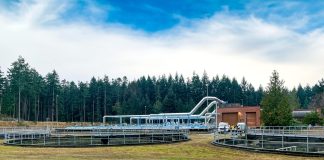


The City of Kimberley, British Columbia, is launching a $400,000 research project to assess wildfire risks in its drinking water watersheds and identify measures to protect water quality and supply.
The two-year Wildfire Ready Watershed Project will combine wildfire modelling, watershed science and land-management planning to examine how severe fires could affect the Mark Creek and Matthew Creek watersheds, which supply the city’s drinking water.
Columbia Basin Trust is contributing $300,000 toward the project, while the city is providing $100,000 from its General Operating Capital Reserve.
The initiative follows years of efforts to secure funding, beginning after the 2018 Meachen Creek Fire highlighted the vulnerability of the community’s drinking water sources to wildfire.
Subscribe to our Newsletter!
The latest environmental engineering news direct to your inbox. You can unsubscribe at any time.
“This project has been years in the making,” said Kimberley Mayor Don McCormick. “Protecting our community’s drinking water is one of Council’s highest priorities. This funding will help us better understand wildfire risks and identify practical actions we can take to protect our water supply and community.”
The project also follows a 2026 wildfire in the Matthew Creek watershed, where an estimated 30% to 40% of the affected area burned at high severity. The fire impacted middle and upper slopes that are important for retaining snowpack and sustaining water flows later in the season.
Severe wildfires can damage vegetation and soils, increasing erosion and sediment runoff while altering water quality, streamflow and the timing of peak flows.
Researchers from Dr. Mathieu Bourbonnais’s fire science lab at the University of British Columbia Okanagan will work with wildland fire ecologist Bob Gray to assess these risks and identify potential mitigation strategies.
The research will proceed in three stages, beginning with wildfire modelling in the Mark Creek watershed under current and projected climate, weather and forest fuel conditions. The modelling will identify areas vulnerable to severe burning and locations where fuel treatments could be most effective.
Those findings will inform watershed modelling to assess potential impacts on erosion, sediment, soil conditions, drinking water quality and quantity, and peak streamflows.
The final stage will evaluate wildfire mitigation strategies, including potential forest harvesting and fuel treatments, to determine how risks can be reduced while protecting water resources and accommodating other watershed uses, such as recreation, forestry and wildlife habitat.
“Wildfire can have long-lasting impacts on watersheds and drinking water supplies,” said Gray. “This project will give Kimberley the science-based information needed to make informed decisions about future watershed management and wildfire risk reduction.”
A key deliverable will be a Wildfire Ready Watershed Toolkit containing models and an analysis framework that other municipalities and First Nations could adapt to assess wildfire risks in their own watersheds.
The findings are also expected to help Kimberley identify the locations and scale of potential mitigation work, guide future watershed management decisions and support funding applications for implementation projects.
The project is expected to be completed within approximately two years.