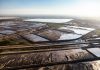
Storms that brought flash flooding to parts of Ontario in late July and early August caused nearly $360 million in insured damage, adding to a costly summer of severe rainfall and flooding across the province. Now, it is leading to a warning from the Insurance Bureau of Canada.
The storms struck parts of Ontario on July 27 and 28 and again between August 1 and 3, according to initial estimates from Catastrophe Indices and Quantification Inc. (CatIQ).
Intense rainfall and flash flooding affected communities across Niagara Region, including St. Catharines, Niagara-on-the-Lake, Grimsby and Lincoln. Thousands of reports were filled about flooded streets and basements, as well as sewer backups. Heavy rainfall was also reported as far north as North Bay.
The latest storms followed a series of thunderstorms that swept through Ontario and Quebec between June 30 and July 3, causing an estimated $439 million in insured damage.
Subscribe to our Newsletter!
The latest environmental engineering news direct to your inbox. You can unsubscribe at any time.
Ottawa was particularly hard hit during that earlier storm system. The city recorded 118 mm of rain on Canada Day, breaking its all-time July daily rainfall record. Local officials reported more than 4,500 flooded basements as sewer backups and drainage failures affected neighbourhoods across the city.
Combined, the two stretches of severe summer weather caused nearly $800 million in insured damage, although the estimates cover different storm systems and geographic areas.
The Insurance Bureau of Canada (IBC) figures do not include the substantial impacts of the rainstorms that tore through the Greater Toronto Area on September 2. Parts of Toronto received more than 100 mm of rain in just a few hours, causing major and widespread damage.
IBC says all recent losses reinforce the need for governments to increase spending on infrastructure and other measures designed to reduce flood damage.
“This has been another difficult year for communities across Ontario, as families and businesses face the growing toll of extreme weather,” said Amanda Dean, IBC vice-president for Ontario and Atlantic. “Catastrophic flooding events are no longer unexpected. They are becoming more frequent, and each one seems more severe than the last.”
Following the Niagara region flooding, IBC deployed its Virtual Community Assistance Mobile Pavilion helpline and established a community hub in St. Catharines to assist residents with insurance questions and the claims process.
IBC is calling for governments to focus on three areas: improving infrastructure that protects communities from flooding; shifting spending from disaster recovery toward prevention; and giving Canadians greater access to information about their individual flood risk.
The insurance organization says investments in stormwater, wastewater and drainage systems are among the most effective ways of reducing flood damage. It estimates Canada faces a $60-billion infrastructure deficit, leaving many communities dependent on drainage systems that were not designed to accommodate increasingly intense rainfall.
IBC is also calling for greater use of property-level measures such as backwater valves, sump pumps and home retrofits, alongside stronger building codes and land-use planning.
“Canada’s flood challenge is clear,” Dean said. “What remains unclear is why we continue to underinvest in solutions that could better protect people, property and communities.”
The organization also wants provincial governments to make Canada’s Flood Risk Finder available to residents. The tool is intended to provide property owners with information about their exposure to flooding and help them make decisions about protecting their homes.
Flood and water-related insured losses in Canada have increased by more than 300% over the past 20 years compared with the previous two decades, according to CatIQ.
More broadly, insured losses from extreme weather have averaged more than $3.7 billion annually over the past decade, compared with $1.4 billion annually during the previous decade and $883 million in the decade before that.
After adjusting for inflation, annual insured losses from extreme weather have increased by approximately 320% since the late 1990s and early 2000s, according to IBC.
Canada experienced its costliest year on record for insured severe-weather damage in 2024, when losses exceeded $9 billion.
“The growing cost of severe weather is being felt by households, communities, insurers and governments across Canada,” said Maximilien Roy, IBC vice-president of strategy. “These storms underscore the need for greater investment in measures that reduce flood risk and better protect Canadians from future losses.”