By Todd Parker
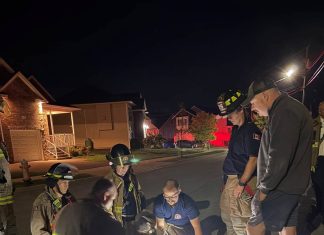
On a warm evening this past June, firefighters again cleared part of downtown Wheatley, Ontario, after a hydrogen sulfide gas leak was discovered. This leak is the same gas that was responsible for Wheatley’s 2021 explosion that levelled a local pub on Erie Street North.
Most Ontarians have already forgotten about Wheatley’s explosion. But for residents, the memory is fresh, with storefronts boarded up, families displaced for months, and a lost sense of safety. And although Wheatley has been at the receiving end of the consequences of legacy wells, the town is not alone.
Ontario’s public database lists about 27,000 oil and gas wells, but that figure excludes wells that were drilled before reporting was made mandatory around the turn of the 20th century. Early drillers often back-filled the wells with mud and walked away, leaving them improperly sealed. To make matters worse, the locations of many reported wells are vague, making it difficult to locate them precisely.
Subscribe to our Newsletter!
The latest environmental engineering news direct to your inbox. You can unsubscribe at any time.
“When you pull data from an old well, there’s often a tolerance of 50, 100 or even 1,000 metres of uncertainty on the exact location of the well. It’s so uncertain that it’s almost meaningless data,” says Adam Derry, director of engineering at 360 Engineering & Environmental Consultants (360 EEC), the company that conducted the cleanup of the Wheatley explosion.
A site that could blow up again
After the 2021 explosion, the Municipality of Chatham-Kent hired 360 EEC to demolish the damaged block and address further risks in the event that other wellheads or harmful substances were discovered during the demolition. Geochemical samples already hinted at a second gas source within metres of the destroyed pub.
At the start of their work, there was no evidence that the well responsible for the leak had been adequately plugged, meaning it could still be buried below a foundation. Before removing the basements and foundations, the team had to assume a worst-case scenario. This would be uncovering a live conduit that would likely vent both methane and hydrogen sulfide gas. The latter becomes dangerous to human health at 10 parts per million (ppm) and can be fatal above 100 ppm.
As part of their execution strategy, 360 EEC developed an emergency response plan that included detailed emissions modelling and plume dispersion calculations to predict how gas would travel in the event of a release, factoring in local wind patterns and topography. Based on these models, they established tiered emergency planning zones to guide evacuation protocols and safety measures.
“We created a plan on how to re-enter the well and what remediation steps would need to be taken,” explained Derry. “We would re-enter the well, go to the bottom of it and install new casing and cement it in place.”
As crews began removing debris and soil, every layer of ground was methodically tested. The team used a laser spectrometry tool designed specifically to detect methane, rather than broader volatile organic compounds (VOCs) that can trigger false alarms. When methane was detected, they immediately followed up with hydrogen sulfide testing, which was crucial given how toxic even small concentrations can be.
To expand their view beyond the immediate site, the team conducted a drone-based methane scan of the entire town. This provided a baseline snapshot of existing methane emissions before any digging occurred. If sealing the well forced gas to migrate and emerge elsewhere, as has happened in similar cases, the team could fly the same pattern again and measure any changes, helping identify new emission points before they posed a danger.
They also turned to more advanced lab work. Gas samples collected during excavation were sent to a specialist at the University of Windsor, who used isotope fingerprinting to determine the origin of the gas, helping the team identify whether the risk was ongoing.
Planning for invisible dangers, measuring gas in real time, tracking its movements above and below ground made the difference between a controlled cleanup and another disaster.
Why you may never see the warning signs
Many Ontarians are unfamiliar with the classic giveaways of old gas wells. These include rotten egg odours, long-dead vegetation, an unexplained ground depression that never fills, or oily sheens in puddles. While these warning signs are useful, they are unreliable. Gas can migrate sideways through buried manmade or naturally occurring features and appear blocks away from the wellhead. Also, the absence of these signs doesn’t mean there won’t be a problem in the future.
Under current Ontario regulations, the liability follows the land title. Current owners are responsible for abandoned wells on their property, while oil and gas operators, most of whom are no longer in business and sold the land decades ago, have no residual obligation. Municipalities bear the same burden under roads and parks. First responders, meanwhile, may find themselves dealing with an incident most have never trained for.
Getting ahead of the next Wheatley
Getting ahead of this issue is much easier before an explosion. But this is a challenge when the data across Ontario is so unreliable. If a well on a property is suspected of posing a risk, the first step is to get gas samples collected and analyzed to help determine whether the gas is thermogenic (from deep underground, with a distinct chemical signature) or biogenic (produced by bacteria near the surface). Identifying the gas type can help locate the source and assess the level of risk.
As Wheatley gears up for restoration of its downtown core, the bigger question is how many other Ontarian towns sit atop the same hidden risks? The technology exists to retire these ghost wells for good. But what’s needed is a province-wide push to find them before they remind us, explosively, where they are.
Until then, the lesson is simple: if your property history is murky and your basement smells vaguely of rotten eggs, assume nothing and test everything, before the sirens start again.
Todd Parker is chief operating officer at 360 Engineering & Environmental Consultants. For more information, visit www.360eec.com
This article appeared in the August 2025 edition of Environmental Science & Engineering Magazine.