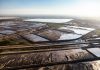
The Ontario Land Tribunal has approved Nelson Aggregate’s proposed expansion of its Burlington Quarry at Mount Nemo, despite opposition from the City of Burlington over potential impacts to groundwater, the natural environment and nearby residents.
The August 18 decision clears the way for the required aggregate licence to be issued, subject to conditions and revisions to the company’s site plans and Adaptive Management Plan.
The Tribunal issued its decision following an extensive hearing involving technical evidence and expert testimony. It found that the expansion is consistent with provincial planning policy, represents good planning and is in the public interest.
According to Nelson Aggregate, the Tribunal also determined that the company had satisfactorily addressed concerns related to groundwater and surface water, natural heritage, fugitive dust, blasting and fly-rock through its site plans, monitoring programs and Adaptive Management Plan.
Subscribe to our Newsletter!
The latest environmental engineering news direct to your inbox. You can unsubscribe at any time.
The City of Burlington, however, said it was disappointed with the decision and maintained that its opposition to the expansion was based on potential impacts to the natural environment, wildlife, groundwater, the rural community and the quality of life of nearby residents.
“This is not the outcome we wanted for Burlington or for Mount Nemo, our world biosphere reserve,” said Burlington Mayor Marianne Meed Ward in a media release on August 18. “I want to thank our residents and community advocates who have worked tirelessly alongside our staff and Council for years to protect this important part of rural Burlington.”
Meed Ward said city staff are reviewing the decision and will advise council on what options remain available.
The city said it is too early to determine what the ruling will mean for the timing and implementation of the expansion or for Burlington’s future involvement. Legal counsel and technical staff are reviewing the conditions, staging requirements, monitoring obligations and further approvals associated with the decision, as well as any potential legal or procedural options.
The Tribunal found that the project is consistent with the Provincial Planning Statement and would make close-to-market aggregate resources available to serve the western Greater Toronto and Hamilton Area.
Ontario’s Ministry of Natural Resources and the Ministry of the Environment, Conservation and Parks advised that they had no outstanding requirements, according to Nelson Aggregate. Conservation Halton resolved its concerns and withdrew from the hearing, while the Niagara Escarpment Commission entered into settlement terms supporting the required Niagara Escarpment approvals.
The Ontario Stone, Sand and Gravel Association (OSSGA) welcomed the Tribunal’s decision and congratulated Nelson Aggregate on “reaching this significant milestone.” According to OSSGA, the decision is significant because it highlights how important it is to have close-to-market aggregate available to support housing and critical infrastructure development in the province.
“We respect the Tribunal’s rigorous process and are grateful for a decision grounded in evidence, science and Ontario’s planning framework,” said Quinn Moyer, president of Nelson Aggregate. “This outcome allows us to continue supplying the high-quality aggregate our growing region needs while delivering significant long-term community and environmental benefits.”
The rehabilitation plan calls for the Burlington Quarry and expansion lands to eventually be conveyed to Conservation Halton following the completion of extraction and rehabilitation. Nelson Aggregate says the arrangement would create nearly 1,000 acres of publicly accessible parkland and open space.
The approval does not mean extraction can immediately begin in the expansion areas.
Under the Tribunal’s interim order, Nelson Aggregate must complete specified revisions to its site plans and Adaptive Management Plan before a final licence order can be issued. Additional monitoring, agency review and environmental approvals will also be required before extraction can begin in the South and West Quarry Extensions.